
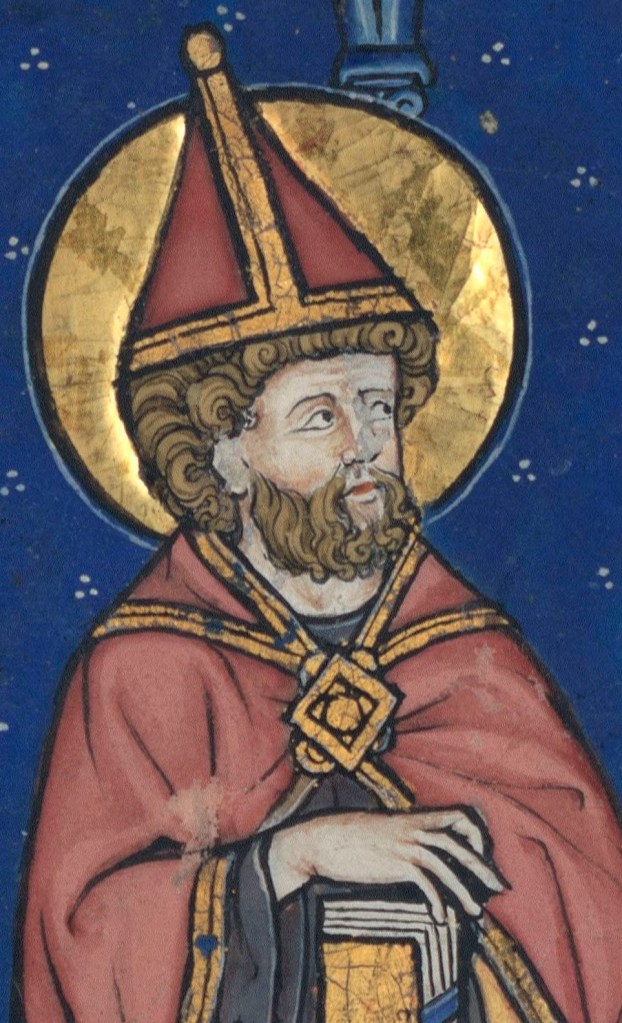
St. Sylvester I served as bishop of Rome during the reign of Emperor Constantine, a period when Christianity moved from persecution to legal recognition. Though later legend embellished his role, Sylvester’s historical significance lies in shepherding the Church during a time of rapid change and growth. He presided peacefully as the Church emerged into public life and as the great Christological controversies of the fourth century began to take shape. Sylvester died in 335, remembered as a faithful pastor who guided the Church through a pivotal moment in its history.
Sylvester’s life reminds us that the Church remains Christ’s possession in every age—whether persecuted or at peace. May his example encourage steady pastoral care, humility in leadership, and trust in God’s providence as the Church bears witness to Christ amid changing times (Matthew 28:20).
 Catholic Jonesboro
Saint Sylvester pray for us.
LikeLike
“Our Confession approves honoring the saints…. [Invoking the saints, however,] even if it were not dangerous, still is not necessary. Besides, we also grant that the angels pray for us. For there is a passage in Zechariah 1:12, where an angel prays, “O Lord of hosts, how long will You have no mercy on Jerusalem?” We admit that, just as the saints (when alive) pray for the Church universal in general, so in heaven they pray for the Church in general. However, no passage about the praying of the dead exists in the Scriptures, except the dream taken from the second book of Maccabees.
“Furthermore, even if the saints do pray for the Church, that does not mean they should be invoked. Our Confession affirms only this: Scripture does not teach the invocation of the saints, or that we are to ask the saints for aid. Since neither a command nor a promise nor an example can be produced from the Scriptures about the invocation of saints, it makes sense that conscience remains uncertain about this invocation. Since prayer should be made from faith, how do we know that God approves this invocation? Without the testimony of Scripture, how do we know that the saints know about the prayers of each one?”
…Therefore, consciences cannot be completely confident that we are heard by the invocation of saints. This invocation, therefore, does not spring from faith. We also have the command to call upon Christ, cf. Matt. 11:28, Isaiah 11:10, Psalm 45:12, Psalm 72:11, Psalm 72:15, John 5:23, 2 Thess. 2:16-17. (Art. XXI, Apology of the Augsburg Confession)
LikeLike