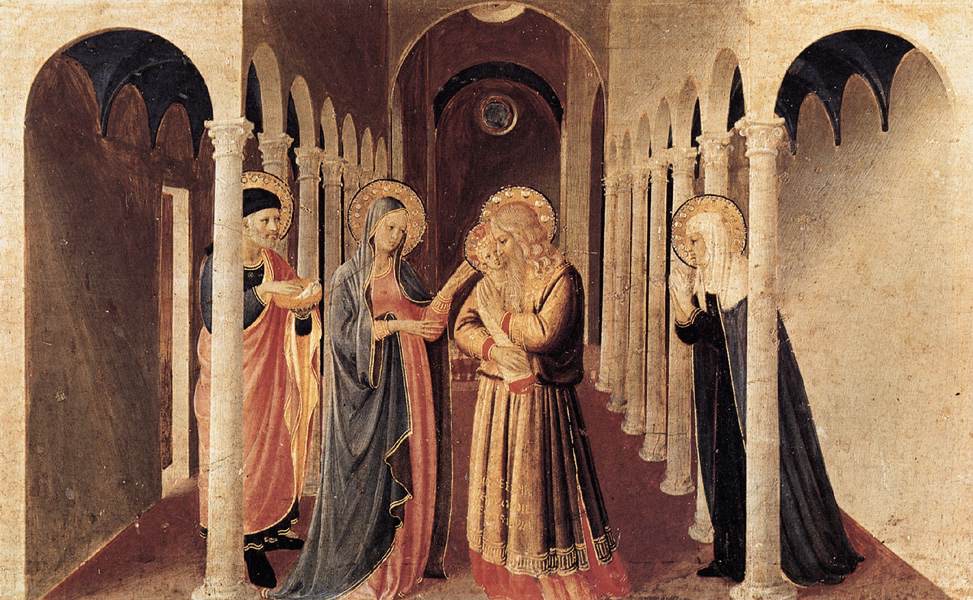
St. Clement, third bishop of Rome, was a disciple of the apostles and a martyr for the faith. He emphasized pastoral care, discipline, and the unity of the Church. Tradition attributes to him letters urging order, reconciliation, and steadfast faith among believers, reflecting Christ’s guidance for the Church. His life exemplifies humility, obedience, and faithfulness to apostolic teaching.
Clement reminds us of the importance of unity, obedience, and faithfulness. May his witness inspire humility, patience, and dedication to preserving peace and truth within the Church, reflecting Christ’s love to all.
St. Cecilia, a Roman virgin and martyr, is celebrated for her dedication to Christ and her witness in the midst of persecution. Tradition emphasizes her love for music as a form of praise to God, linking artistry with devotion. Her courage and commitment inspire Christians to live faithfully, even when it involves sacrifice, and to offer gifts, talents, and lives wholly to God.
Cecilia encourages offering our gifts to God in love and service. May her example inspire courage in faith, dedication to Christ, and the use of our talents to glorify Him and edify His Church.
St. Elisabeth, a princess of Hungary, devoted her life to the poor and sick, practicing humility, charity, and self-denial. She founded hospitals and gave generously, reflecting Christ’s compassion. Despite courtly responsibilities and opposition, she remained steadfast in faith. Her life demonstrates that love for neighbor is inseparable from devotion to God, and that true greatness lies in service and mercy.
Elisabeth inspires us to serve with compassion and humility. May her example encourage generous hearts, care for the suffering, and joyful obedience to God, reflecting His love in practical ways to those around us.
Nereus and Achilleus were first-century soldiers who became Christians. They decided that, as Christians, it was wrong for them to fight for the pagan Roman Empire. So they ran away to the island of Terracina (located southeast of the city of Rome); when they were found, they were beheaded. This occurred during the persecution of Christians under the Roman emperor Trajan. Saint Damasus honored them with a tombstone some years later, at a church dedicated at the site of their deaths. “O miracle of faith!” wrote Damasus, “Suddenly they cease from their fury, they become converted, they flee from the camp of their wicked leader. Professing the faith of Christ, they are happy to witness to its triumph!”
Adapted from “Saints: Becoming an Image of Christ Every Day of the Year”, by Beutner
Today is the Feast of Saint Ambrose, Bishop & Confessor. The appointed readings are Sirach 50:1b–8 and Matthew 5:13-16. Listen to Father Jerome Leckband’s homily from this morning’s Matins service at All Saints.
Yesterday was the Feast of the Annunciation of Our Lord, in which we remember the announcement of the Christ-Child by the archangel Gabriel to the Blessed Virgin Mary and Jesus’ conception by the Holy Spirit in the Virgin’s womb. Beginning on this day, nine months before the Nativity of Our Lord at Christmas, God took on human flesh in order that as the God-Man He might take our sin upon Himself and rescue us from sin, death, and the power of the devil. In Christ, humanity is restored. As Jesus has been born to be the new Adam and the firstborn of the new creation, so now all who are born again through being united with Christ in Holy Baptism have become part of the restored humanity as children of God and have the promise of complete renewal and restoration in Christ.
Benedict was born into a well-to-do, Christian family in Nursia, Italy, around the year 480 and was sent to Rome to be educated when he was a teenager. He was revolted by the immoral behavior he saw there, so he quickly left Rome with his nurse (a caregiver-turned-housekeeper) to live a life of solitude in the mountains. Soon he realized that God was calling him to an even greater abandonment of the world. While he was searching for a place to live in complete solitude, he settled on the city of Subiaco, where he met a monk named Romanus. Romanus brought bread to Benedict every day (disobeying the monastery’s rules), while he lived in a nearby cave for three years. When other men found out about Benedict’s holiness and simple way of life, they wanted to follow him. Benedict settled the men who wanted to be his disciples into twelve separate monasteries, with twelve monks in each. Unfortunately, the monks began to resent him, and they even tried to poison him. (Benedict later decided that he had been too severe with them.) When the cup they tried to poison him with broke after he had blessed it, he recognized what they’d tried to do. He repented of his past severity with them and left them suddenly. He moved to Monte Cassino, the site of a former pagan temple, and around the year 530, he and those who followed him began to build a monastery. This ultimately became one of the greatest monasteries that the world has ever known. Learning from his experiences at Subiaco, Benedict gathered all his monks into one monastery, developed his famous rule for monastic life, and established the practice of ora et labora among his monks, in which they lived a structured life of both prayer and work. He cared for the sick people who lived outside the monastery and the poor who came to the monastery for alms and food. Benedict died in the year 547 as he stood in the monastery’s chapel, with this arms supported by his brothers and his hands lifted up to Heaven.
What an incredible example Saint Joseph is of humble faith! And an example that hits home, perhaps, a little bit more than some of the other saints we remember. Because, admittedly, a good many of the saints’ days observed in the Church’s calendar are apostles, priests, bishops, theological doctors, martyrs—and as a result, in some ways, they may sometimes seem far-removed from our day to day experience, and even, perhaps, other-worldly.
But Joseph, who, other than the Blessed Virgin, is one of the most consequential saints remembered in the liturgical year, was none of those things. He was simply a husband, and a layman, and a simple worker. His saintly example is all bound up in the fact that Joseph quietly fulfilled his family vocations of being a guardian, protector, and provider for the Blessed Mother and for our Lord Jesus Himself. As such, we see in Saint Joseph a shadow of the Heavenly Father who is the guardian, protector, and provider for us all, and an image of what being a faithful husband and father looks like.
In particular, we see how within those vocations, Joseph’s faithfulness comes as a result of—and together with—his humbly and faithfully listening to the Word of God and doing whatever it is that God has given him to do. Joseph never hesitates to obey, and he never draws attention to Himself. The only word he is recorded as saying in the Sacred Scriptures is at the birth of our Lord when he calls His name JESUS, in accordance with the divine angelic pronouncement that the Child will save His people from their sins. Joseph simply follows God’s direction and command, and as a result, he lives a life of strong and yet modest care and self-giving to Mary and Jesus. He just fulfills his vocations and follows the Word of God.
Husbands and fathers: you too are called to be guardians, protectors, and providers for your wife and your children. This is the vocation you have been given and what God has called you to. And you are to fulfill those responsibilities never from a posture of being overbearing or harsh, but from a position of strong yet humble love and self-giving. And in that Saint Joseph is your model. This means that you are called to lead your household; to guard your family (with God’s help) from the influences of the devil and the world. And most of all, it means that you are to hear and heed God’s Word and to make Christ and the Word of Christ central within your family’s life.
Everyone: like Blessed Joseph, you too are called to be faithful laypeople who listen to the Word of God, cling to Christ, and do whatever it is God has given you to do within your various vocations. You have not been called to be apostles, priests, bishops, theological doctors, or God-willing, martyrs, but you have all been given particular callings from God and vitally important responsibilities within those various callings. As you seek to carry them out, strive to follow the example of Saint Joseph by submitting to God’s Word in all humility and, within your daily life and the living out of your vocations, to guard and protect, like Joseph, the dignity of the sacred life and confession of Jesus. And as you do, through Jesus, who has saved you from your sins, you will be temporally and eternally blessed.
Saint Patrick was born in Britain around the time of the late 4th or early 5th century. His family were of modest means, his father being a Romano-British senator, tax collector, and deacon of the church. At some point in Patrick’s early life, probably his teen years, his family’s villa was raided by Irish pirates, and took him as a slave to Ireland. His captors had him tend sheep and he lived in horrible conditions. In his Confessio, an early autobiographical account of this life, he claims that while in his youth he was not particularly devout, he turned to God for strength in his captivity. Some years later, he escaped his captors, and convinced a boatman to sail him back to Britain to find his family. When disembarking, him and his party wandered the wilderness for weeks, nearly succumbing to starvation. His insistence that God would provide came to fruition, where the party finally happened upon some wild boar. This gained respect and trust from those around him, leading them to Christ.
During his early 20’s, Patrick continued to study Christianity and grow in his faith. One night he was given a vision, that he would return to Ireland and convert his captors. Acting upon this, he landed at county Wicklow in Ireland, where he was not welcome. He spent much of his early time in Ireland avoiding hostile pagan chieftains, but baptized and converted many to Christ throughout his travels. Legend says that during a sermon to the pagans, he plucked a clover from the ground near his feet and used it to explain to them the Trinity.
Eventually, Patrick arrived at the court of King Lóegaire, the high king of Ireland, where Druid priests displayed their demonic magic, theatrically plunging the hall into darkness. Instead of cowering in fright, Patrick observed aloud that these priests could create darkness but that they could not dispel it–which they could not. He then proceeded to use this incident as the theme of a sermon, in which he likened Christ to the light. Many of the assembled nobles converted to Christianity that day, and Patrick gained the king’s respect and protection.
In many ways, Patrick was more Irish than the Irish. He loved Irish legends, poetry and songs, and he insisted that this heritage be documented and retained. For their part, the Irish loved him and embraced him. Patrick lived his life in Ireland and died there. He left behind a Christian people, a civilized people, and he left behind towns, schools, seminaries and a love of learning perpetuated to this day.
The text of [Lutheran Service Book 604], “I Bind unto Myself Today,” is attributed to St. Patrick. This beautiful prayer, traditionally called “St. Patrick’s Breast-Plate,” is supposed to have been composed by Patrick in anticipation of his victory over paganism. The translation of the prayer in [Lutheran Service Book] from the old Irish text is a paraphrase by Cecil F. Alexander [1818-95]. The “Apostle of Ireland,” as Patrick is sometimes called, is also associated with the shamrock, which he used to explain the Trinity. “I Bind unto Myself Today” also deals with the topic of the Holy Trinity.
“I bind unto myself the name, The strong name of the Trinity By invocation of the same, The Three in One and One in Three, Of whom all nature has creation, Eternal Father, Spirit, Word. Praise to the Lord of my salvation; Salvation is of Christ the Lord!“
(Adapted from John Murphy Ball (March 1999), “In Search of St. Patrick”, Lutheran Witness. Hymn stanza for “I Bind unto Myself Today” (LSB 604): public domain.)
Perpetua and Felicitas were Christian women who lived in Roman-controlled Carthage in North Africa in the late second and early third centuries. Perpetua was a young, married noblewoman and new mother; Felicitas was a slave, who was pregnant when she was arrested. The two were catechumens, part of a group of newly converted Christians preparing for Baptism who were arrested for their illegal faith. Christianity was seen as anti-social by the Roman government, who enforced a polytheistic paganism that blended together lots of cultures’ native religions, in an attempt to keep the peace across their huge empire.
Perpetua’s father, who was not a Christian, visited her in prison three times to convince her to renounce her faith and save her life. He tried violence to scare her, he tried asking her to think of him and of her infant son, he tried grieving and great shows of emotion. Perpetua was deeply upset, but she refused to change course: She confessed that she was a Christian, prayed for and tried to comfort her father, and still refused to offer sacrifices to Caesar or renounce Jesus. For this, Felicitas and the others were condemned to the wild beasts in the amphitheater games held in honor of the emperor’s birthday. During their time in prison awaiting their fates, Perpetua was baptized, and Felicitas gave birth while in prison. It was illegal to execute a pregnant woman, and Felicitas had been worried that she would not be able to face martyrdom with her friends. She went into labor a month early, and so faced death alongside her brothers and sisters in Christ.
The Christians eventually went to their deaths in the colosseum with quiet joy and courage, in sure hope of Christ’s love and His promise of resurrection. While facing down the wild animals, Perpetua stopped to fix her hair, so that she would not appear disheveled or in mourning, and helped Felicitas back on her feet after she was trampled. They ultimately died by the gladiator’s sword. The editor of Perpetua’s prison diary describes the Christians’ deaths, noting that, before they died, they kissed one another with the kiss of peace.
(Adapted from The Lutheran Witness; “Our Great Heritage: Perpetua and Felicitas”, by Molly Lackey)