St. Matthias, Apostle

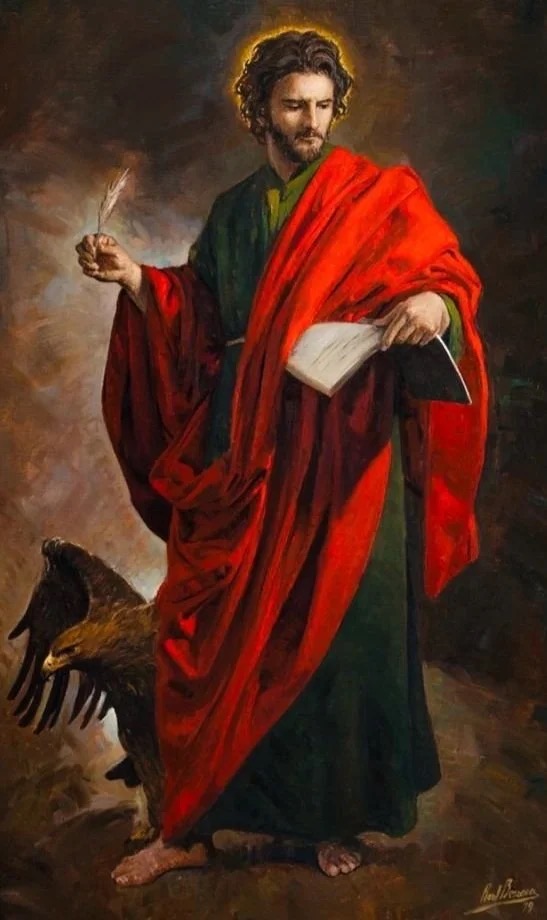
Yesterday (Feb. 24), the church celebrated the Feast of St. Matthias, Apostle. Matthias was one who was among the disciples of Jesus during his earthly ministry. The Early Church fathers held that he was one of the 72 sent out by Jesus in Luke 10:1-20. Following Jesus’ ascension, Matthias was chosen by lot to be the twelfth apostle after Judas’ betrayal and suicide. Scholars posit that he went either to Ethiopia or Armenia. He was martyred for the faith, possibly at Colchis in Asia Minor and around 50 AD. The Church of St. Matthias in Trier, Germany claims the apostle is buried there, making him the only apostle buried north of the Alps in Europe.

Let us pray: “Almighty God, You chose Your servant Matthias to be numbered among the Twelve. Grant that Your Church, ever preserved from false teachers, may be taught and guided by faithful and true pastors; through Jesus Christ our Lord, who lives and reigns with You and the Holy Spirit, one God, now and forever.” Amen.

Description adapted from and prayer quoted from “Treasury of Daily Prayer,” 1236-1237.

Saint Juliana of Nicomedia

Saint Juliana Virgin Martyr aged 18 (of Nicomedia) | Flickr

Juliana (b. 285) lived during the Christian persecution under the Roman emperor Diocletian. She was betrothed to Eulogius, the prefect of Nicomedia, but refused to become his wife unless he accepted the faith of Christ. Her father therefore commanded that she be stripped and soundly beaten, then handed her over to the prefect. When Eulogius asked why she continued rejecting him, Juliana responded, “If you will adore my God, I will consent, otherwise I will never be yours!” Eulogius answered that he could not do so because the emperor would have him beheaded, to which Juliana replied, “If you are so afraid of a mortal emperor, how can you expect me not to fear an immortal one? Do whatever you please, because you will not be able to win me over!” According to tradition, Juliana was thereafter tortured in many ways, including being beaten and hung up by the hair of her head for half a day. Afterward, she was bound in chains and put in prison, where it is said that a demon appeared to her disguised as an angel of the Lord and tried to convince her to give up the faith and so spare herself further torture. Juliana refused. In the end, Saint Juliana was beheaded for refusing to deny Christ. The year was 304. (Adapted from The Golden Legend)

Saint Valentine

There once lived, in the twilight of Rome’s grandeur, a humble priest named Valentine. He walked those ancient streets under the watchful eyes of statues and emperors, but his heart beat for a Kingdom not of this world. The age was that of Emperor Claudius II, who saw fit to forbid Christian marriages—believing that soldiers, untethered by wife or child, would better serve his legions.

Yet for all that Rome considered wise in war and statecraft, Valentine recognized a higher wisdom. In the words of Tertullian, one of the early Fathers, “What has the Emperor to do with the Christian, save to learn that Christ’s kingdom is not of this world?” Still, Claudius decreed the banning of Christian unions. The priest Valentine dared to minister in secret, solemnizing the vows between Christian men and women who would not be robbed of the sacred blessing of marriage.

“For this reason a man shall leave his father and mother and be joined to his wife, and the two shall become one flesh” (Ephesians 5:31).

These forbidden weddings, carried out by candlelight in hidden chambers, were Valentine’s gentle rebellion. He believed that, in God’s design, love—especially the love that binds husband and wife—carries within it an echo of the divine. Even in the gloom of persecution, he offered hope, for “love bears all things, believes all things, hopes all things, endures all things” (1 Corinthians 13:7).

It was not long before the Roman officials turned their dark attention upon him. Love, when nurtured in the face of cruelty, tends to shine all the brighter, and such a light cannot easily hide itself. Arrested and imprisoned, Valentine found himself behind cold, unyielding bars. Roman records say that he healed a jailer’s daughter who had lost her sight. She came to see not only with physical eyes but, as the legend goes, gained the spiritual sight to embrace Christ.

Some traditions whisper that he signed a final note to her with the words “From your Valentine.” Perhaps that detail has grown with time, but it illustrates well the warmth of this man’s heart—compassion that would bloom into legend. In the spirit of St. Augustine, who wrote that “love is the beauty of the soul,” Valentine’s every action seemed a testament to that singular virtue.

Alas, the hand of Rome was relentless. Valentine, who would not betray his Lord or his calling, was subjected to beating, torture, and, ultimately, the sentence of death. On the 14th of February—around the year 269 AD—he was beheaded. It was a grisly end in human terms but, in Christian conviction, it was the very gateway into eternal life.

Indeed, if we reflect upon his final hours, we might recall the counsel of another Church Father, Ignatius of Antioch, who wrote, “It is better for me to die in Christ Jesus than to be king over the ends of the earth.” Valentine’s sacrifice, crowned in martyrdom, proved that no earthly power could rob him of his divine inheritance.

(Adapted from Saint Valentine, by the folks at Ecclesiastical Sewing | ecclesiasticalsewing.com)

St. Scholastica

Scholastica (d. 543), twin sister of Saint Benedict, was born into a good family in Nursia, Italy. Scholastica lived a holy, secluded life before she founded a nunnery, but under Benedict’s direction. She and Benedict met only once a year and only for one day. The last time they met, when Benedict started to leave, Scholastica–believing she was soon to die–objected and begged him to stay. Benedict refused, saying that his Rule obliged him to return to the monastery. Scholastica bent her head and prayed, and a violent storm broke out. A brother to the end, Benedict blamed his sister for the storm and asked what she had done. Scholastica replied, “I asked a favor of you, and you refused it. I asked it of God, and he has granted it.” Since Benedict couldn’t leave, they spent the night talking about holy things and the joys of heaven. When Scholastica died three days later, Benedict is said to have seen a vision of her soul flying up to Heaven like a dove.  (Adapted from Saints: Becoming an Image of Christ Every Day of the Year, by Beutner)

Saint Dorothy

Dorothy was a Christian from Caesarea, a region now in modern Turkey, who consecrated herself to Jesus Christ. During the persecution of Christians under the Roman emperor Diocletian in the year 311, she was arrested and condemned to death. According to tradition, as she was taken to her execution, a lawyer mocked her faith, but she told him she would send him flowers from Heaven. When he unexpectedly received roses after her death, he converted to the faith.  (From Saints: Becoming an Image of Christ Every Day of the Year, by Beutner)

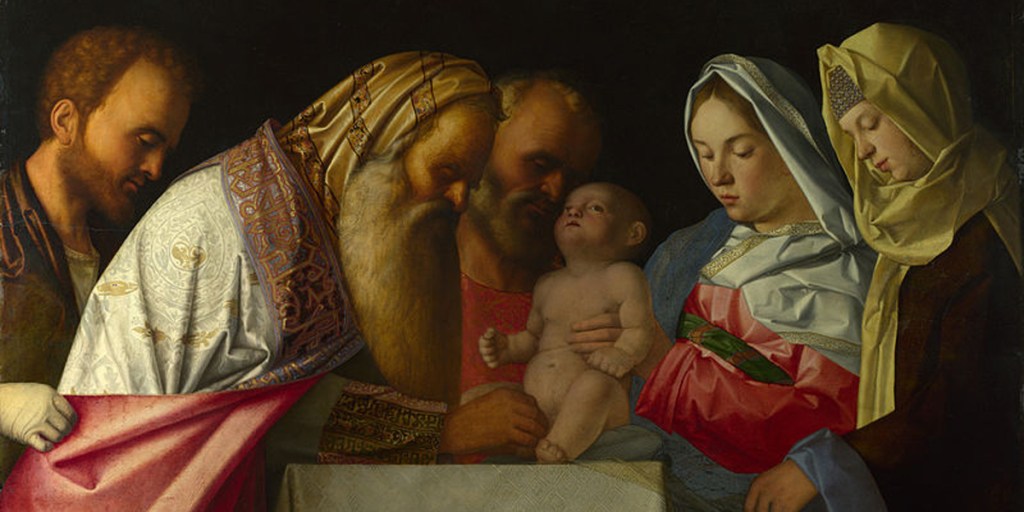
Dormition of the Blessed Virgin Mary

Since St. Mary is truly the mother of Jesus, then surely she must also be called the mother of God, since Jesus is God. Behold in her motherhood the mystery of the incarnation. For how can He who is the eternal God, ever blessed, have a mother? How can this virgin contain within her womb Him who holds all things? How can a creature bear the Creator? Reason will never know, but faith must bend the knee, believing, and say, Mary bore God, held God in her arms, and nursed God at her breast; Mary laid God in an infant bed, made soup for God, yea, was mother to God in every way proper for a mother to be a mother.

For in this is the reality of the incarnation: God Himself has become flesh, our flesh. Since this is so, He must also have a mother. Thus all motherhood is sanctified in this, and serves to show forth the humble manner in which our salvation was wrought. And all generations must call this virgin blessed, since she has now in truth become the mother of all who are in Christ. And as she was of lowly state, in order that Christ might be born of lowly state, so also must we all humble ourselves and consider the lowly state of faith to be truly high in the sight of God. (Burnell Eckardt, from “Every Day Will I Bless Thee: Meditations for the Divine Office”)

St. Lawrence, Deacon & Martyr (Aug. 10)

During the persecution of Christians under the Roman emperor Valerian in the year 258, Roman officials ordered Lawrence, a deacon, to bring them the treasures of the Church. Lawrence obediently spent the next three days gathering together the poor people who were supported by the Church. When he presented these poor people to the prefect, explaining that they were the true treasures of the Church, the prefect was not amused by the irony. He had Lawrence slowly burned to death over a great gridiron. During this torture, Lawrence made the famous reply that he was done on that side and could be turned over. After having prayed for the conversion of the city of Rome in order that the Christian faith might spread throughout the world, Lawrence died. The example of his life and death made a great impact on the people of Rome, and many became followers of Christ. Lord, show us how to love and serve the poor like Saint Lawrence.

(Adapted from “Saints: Becoming and Image of Christ Every Day of the Year,” by Dawn Beutner)

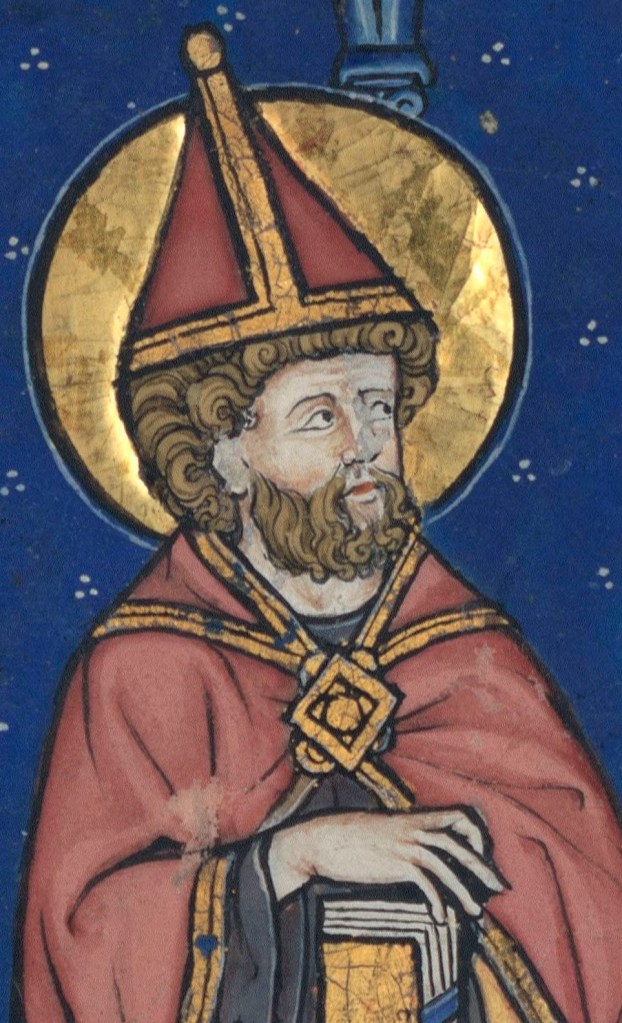
Saint Patrick, Bishop & Martyr (Mar. 17)

On this day, the Church commemorates St. Patrick, Missionary to Ireland. It is good to remember this well-loved and best-known missionary saint for his life and work. He was born to a Christian family in Britain around AD 389. Captured by raiders as a teen, he was forcefully taken to Ireland and forced to work as a herdsman. He escaped after six years of imprisonment and entered a monastery in France. He was ordained as a bishop and is believed to have returned to Ireland in 433 AD, where he spent the rest of his life proclaiming the Gospel and founding Christian communities. He was a defender of the doctrine of the Holy Trinity during a time when the doctrine was under attack. He wrote many contributions, including his autobiography and prayers and hymns that are still used today. He is believed to have died on March 17, AD 466 in Ireland.

“I bind unto myself the name,
The strong name of the Trinity,
By invocation of the same,
The Three in One and One in Three.
By whom all nature hath creation,
Eternal Father, Spirit, Word:
Praise to the Lord of my salvation,
Salvation is of Christ the Lord.”
–From St. Patrick’s Breastplate

Description adapted from, and St. Patrick’s Breastplate quoted from: “Treasury of Daily Prayer,” 1285-1286.

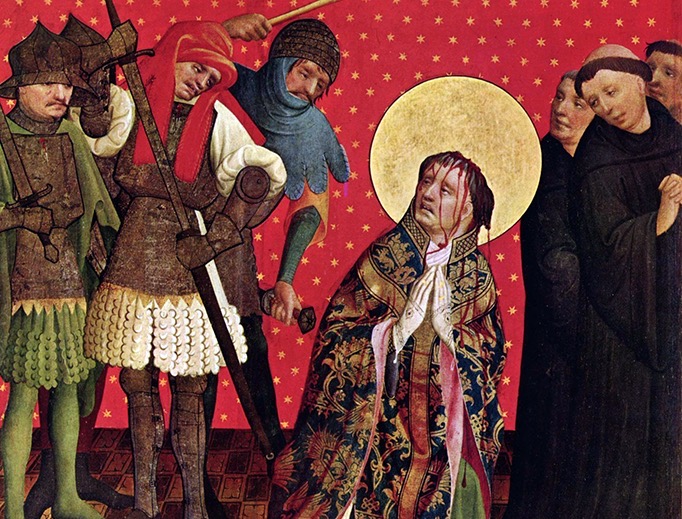
Eulogius of Cordoba, Martyr

The story of Eulogius is one of constant, faithful Christian confession under the hand of Muslim persecution. By the middle of the ninth century, the Muslim Moors had taken over almost the whole of Spain. Christians were allowed some latitude to remain in their faith, as long as they did it quietly and didn’t offend the name of Muhammed (which would carry the death penalty). However, they were heavily taxed, mocked, and otherwise poorly treated. Eulogius was a priest in Cordoba, Spain at the time–a devout, gentle, reverent, well-educated priest steeped in the Sacred Scriptures–who cared deeply about the plight of the Christian people. During this time, an increasing number of young people began to have a more passionate zeal for the Christian Faith, to the extent that they were growing weary of having to keep quiet about it. They saw it as disingenuous to keep their faith secret. After all, Jesus said, “Whoever confesses me before men, I will confess before my Father in heaven; but whoever denies me before men, I will deny before my Father in heaven.” As their passion for the faith grew, the threat of martyrdom grew also. In fact, many of these young “radical” Christians were willing and even glad to die a martyr’s death for the sake Christ. Eulogius advised them and, at times, protected them. As time went on, he would also accompany them to their execution and later write the story of their faith and life. Dozens upon dozens of Christians were killed in Cordoba alone during this time (the 850s). They were accused of insulting Muhammad or something similar. Eulogius wrote many of their stories, showing the bravery and steadfastness with which they confessed their hope in Jesus. Eventually, Eulogius himself was taken prisoner and condemned to death. According to Butler’s Lives of the Saints, “arriving at the place of execution, he knelt down, extended his arms, made a large sign of the cross, prayed silently, and offered his neck to the sword.” Eulogius was put to death March 11, 859.”

Patrick Hamilton, Martyr

Patrick Hamilton was a young professor at the University of St. Andrews in Scotland. Related to Scottish royalty through both parents, he studied in Paris where he read Erasmus and Luther and was convinced of the need to reform the Church of corruption and restore its proper focus on the Gospel. As professor, Hamilton attacked the ongoing moral abuses of many of the clergy, as well as false doctrine and abusive ecclesiastical practices. He came to the attention of Archbishop Beaton at the Cathedral who determined to arrest Hamilton for heresy. Upon the advice of friends, Patrick escaped to the continent where he travelled immediately to Wittenberg to hear Luther in person.

Upon returning to St. Andrews, Hamilton was (strangely, and perhaps underhandedly) invited to preach. He proclaimed salvation by faith alone, exerting great influence among the students, monks, priests, and professors of St. Andrews. Although warned by his friends, Patrick refused to flee and was quickly arrested and hauled before a council of monks, priests, and other clerics under the influence of Beaton. Patrick stood solidly on the Word of God and refused to back down on seven major charges that were central tenets of the Reformation’s evangelical catholic theology. He also denied the existence of Purgatory and affirmed the pope as an antichrist. He denounced relics as having any merit, in a town with a cathedral that boasted relics of great merit for pilgrims to pay to see, under the altar.

When offered his life for a recantation Patrick Hamilton replied: “As to my confession, I will not deny it for the fear of your fire, for my confession and belief is in Christ Jesus. Therefore I will not deny it. I will rather be content that my body burn in this fire for the confession of my faith in Christ, than my soul should burn in the fire of hell for denying the same.”

On the 29th of February, the twenty-four-year-old college professor was burned at the stake at the portico to the University while his students stood in shock, and the Franciscan friar teased him to call on the Virgin Mary to help him out. Upon his death, many others took up the cause of the martyr and spread the Gospel across Scotland. (Adapted from The Martyrdom of Patrick Hamilton, 1528, by Bill Potter)