
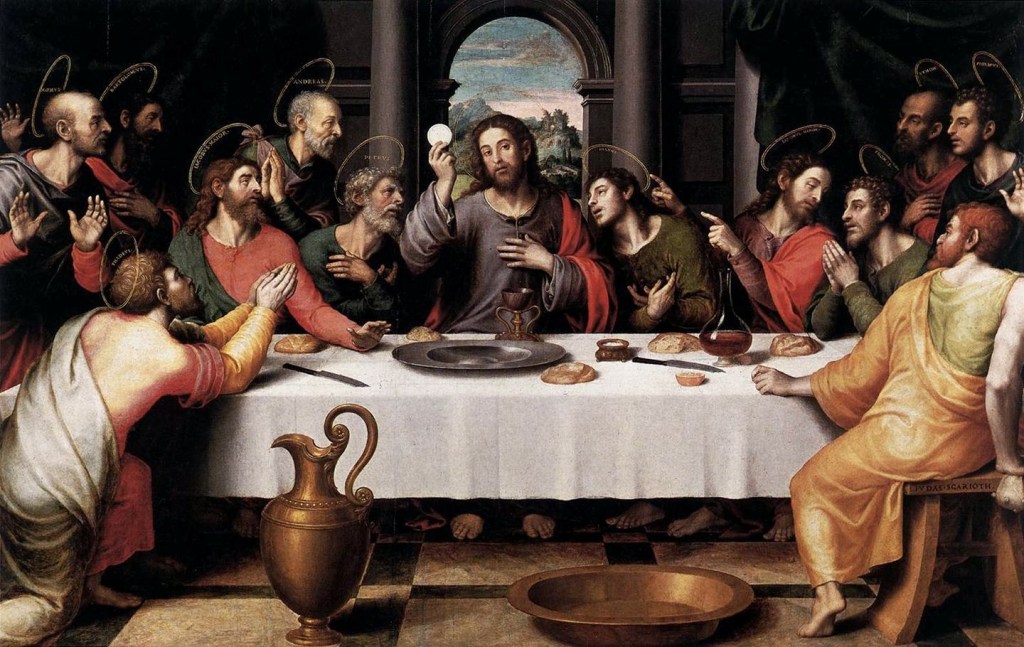
Maundy Thursday

Maundy Thursday commemorates the night on which our Lord Jesus Christ instituted the Holy Supper and gave His disciples the new commandment of love. On this night, Christ humbled Himself to wash His disciples’ feet (John 13:1–15) and gave His Body and Blood for the forgiveness of sins (1 Corinthians 11:20–32). The Church remembers this day as the beginning of the great Three Days, in which Christ willingly enters His Passion for the salvation of the world. Maundy Thursday reveals the depth of Christ’s love, expressed through humble service and sacrificial giving.

Christ’s love is not spoken only in words but enacted in service and self-giving. As He kneels before His disciples and gives Himself for them, we are taught what love truly is. May this day draw us into deeper gratitude for Christ’s mercy and shape our lives in humble service toward one another.

Readings: Exodus 24:3–11 / 1 Corinthians 11:20–32 / John 13:1–15

All Saints Classical Lutheran School forms children in this inheritance. Learn more at classicaljonesboro.org

Saint Dorothy

Dorothy was a Christian from Caesarea, a region now in modern Turkey, who consecrated herself to Jesus Christ. During the persecution of Christians under the Roman emperor Diocletian in the year 311, she was arrested and condemned to death. According to tradition, as she was taken to her execution, a lawyer mocked her faith, but she told him she would send him flowers from Heaven. When he unexpectedly received roses after her death, he converted to the faith.  (From Saints: Becoming an Image of Christ Every Day of the Year, by Beutner)

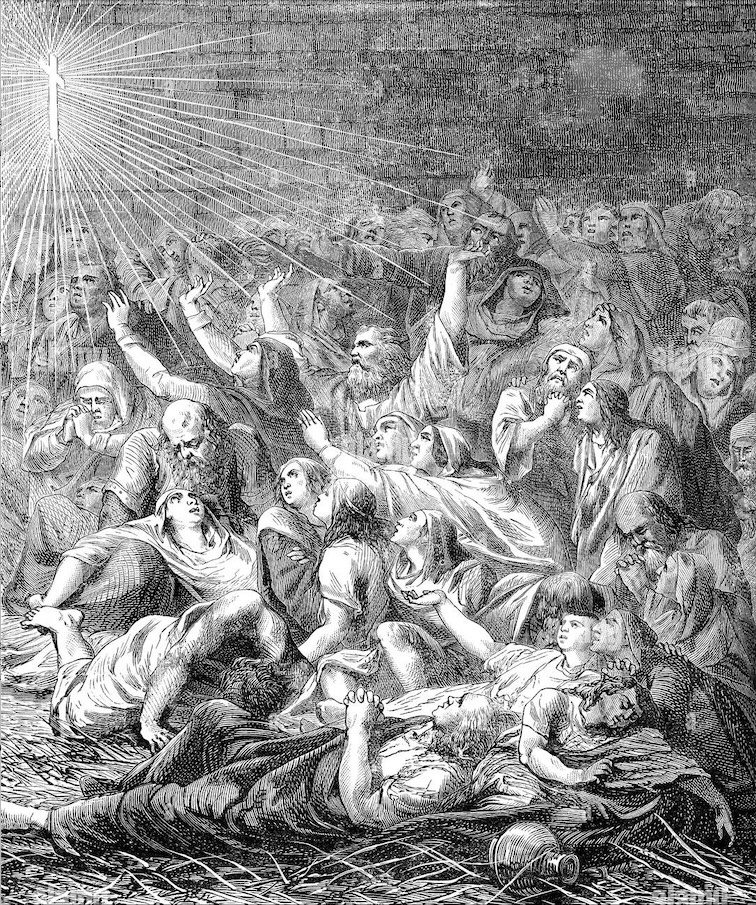
Saturninus, Dativus, & Companions, Martyrs

Saints Saturninus, Dativus, and Companions (sometimes referred to as the forty-nine martyrs of Abitina) died under the persecution of Diocletian in 304. The emperor’s edict included the order to destroy all copies of the Scriptures with fire and to give up meeting together. Many Christians obeyed, but many more refused. Saturninus was a priest in Abitina, in North Africa. He and his congregation were arrested one Sunday by one of the local magistrates and a group of soldiers. All of the Christians–both women and men–were incredibly brave, speaking boldly of their faith in Christ. In particular, their interrogators were interested in getting a confession of their taking part in the assembly of Christians (the Mass, or Divine Service). One of them answered: “Sine dominico non possumus” – we cannot live without this thing of the Lord, referring to the Blessed Sacrament of the Eucharist. The martyrs were not executed but died in prison, either from prolonged exposure to harsh conditions or from the effects of the tortures they underwent.