Saint Joseph (Mar. 19)

Homily for the Feast of St. Joseph

by Fr. Josh Leigeber

IN+J

What an incredible example Saint Joseph is of humble faith! And an example that hits home, perhaps, a little bit more than some of the other saints we remember. Because, admittedly, a good many of the saints’ days observed in the Church’s calendar are apostles, priests, bishops, theological doctors, martyrs—and as a result, in some ways, they may sometimes seem far-removed from our day to day experience, and even, perhaps, other-worldly.

But Joseph, who, other than the Blessed Virgin, is one of the most consequential saints remembered in the liturgical year, was none of those things. He was simply a husband, and a layman, and a simple worker. His saintly example is all bound up in the fact that Joseph quietly fulfilled his family vocations of being a guardian, protector, and provider for the Blessed Mother and for our Lord Jesus Himself. As such, we see in Saint Joseph a shadow of the Heavenly Father who is the guardian, protector, and provider for us all, and an image of what being a faithful husband and father looks like. 

In particular, we see how within those vocations, Joseph’s faithfulness comes as a result of—and together with—his humbly and faithfully listening to the Word of God and doing whatever it is that God has given him to do. Joseph never hesitates to obey, and he never draws attention to Himself. The only word he is recorded as saying in the Sacred Scriptures is at the birth of our Lord when he calls His name JESUS, in accordance with the divine angelic pronouncement that the Child will save His people from their sins. Joseph simply follows God’s direction and command, and as a result, he lives a life of strong and yet modest care and self-giving to Mary and Jesus. He just fulfills his vocations and follows the Word of God.

Husbands and fathers: you too are called to be guardians, protectors, and providers for your wife and your children. This is the vocation you have been given and what God has called you to. And you are to fulfill those responsibilities never from a posture of being overbearing or harsh, but from a position of strong yet humble love and self-giving. And in that Saint Joseph is your model. This means that you are called to lead your household; to guard your family (with God’s help) from the influences of the devil and the world. And most of all, it means that you are to hear and heed God’s Word and to make Christ and the Word of Christ central within your family’s life.

Everyone: like Blessed Joseph, you too are called to be faithful laypeople who listen to the Word of God, cling to Christ, and do whatever it is God has given you to do within your various vocations. You have not been called to be apostles, priests, bishops, theological doctors, or God-willing, martyrs, but you have all been given particular callings from God and vitally important responsibilities within those various callings. As you seek to carry them out, strive to follow the example of Saint Joseph by submitting to God’s Word in all humility and, within your daily life and the living out of your vocations, to guard and protect, like Joseph, the dignity of the sacred life and confession of Jesus. And as you do, through Jesus, who has saved you from your sins, you will be temporally and eternally blessed. 

IN+J

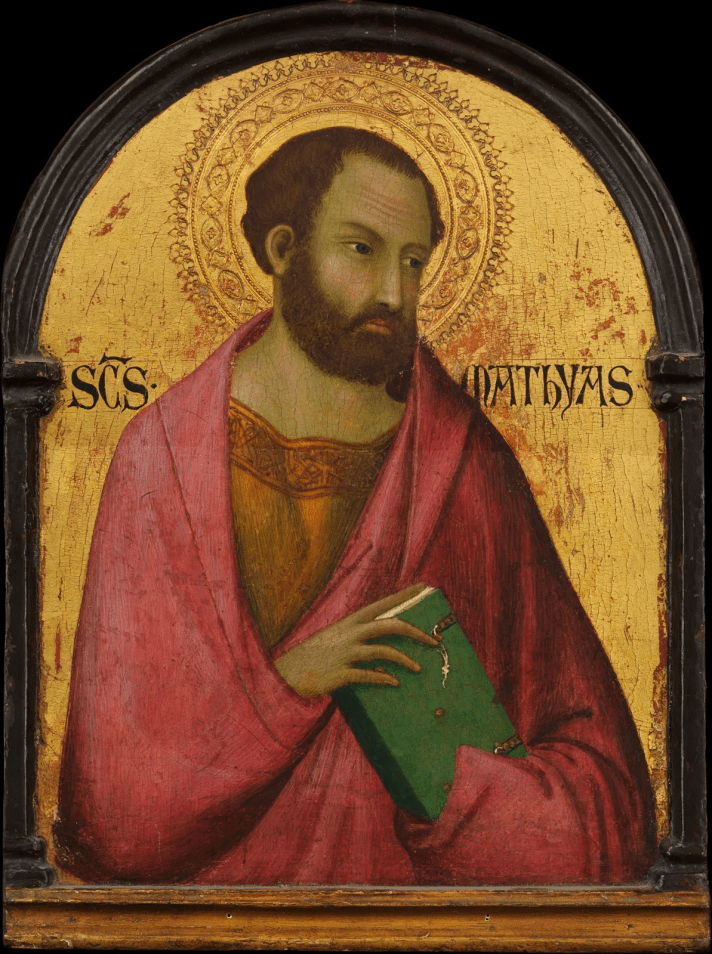
St. Matthias, Apostle

Yesterday (Feb. 24), the church celebrated the Feast of St. Matthias, Apostle. Matthias was one who was among the disciples of Jesus during his earthly ministry. The Early Church fathers held that he was one of the 72 sent out by Jesus in Luke 10:1-20. Following Jesus’ ascension, Matthias was chosen by lot to be the twelfth apostle after Judas’ betrayal and suicide. Scholars posit that he went either to Ethiopia or Armenia. He was martyred for the faith, possibly at Colchis in Asia Minor and around 50 AD. The Church of St. Matthias in Trier, Germany claims the apostle is buried there, making him the only apostle buried north of the Alps in Europe.

Let us pray: “Almighty God, You chose Your servant Matthias to be numbered among the Twelve. Grant that Your Church, ever preserved from false teachers, may be taught and guided by faithful and true pastors; through Jesus Christ our Lord, who lives and reigns with You and the Holy Spirit, one God, now and forever.” Amen.

Description adapted from and prayer quoted from “Treasury of Daily Prayer,” 1236-1237.

Saint Juliana of Nicomedia

Saint Juliana Virgin Martyr aged 18 (of Nicomedia) | Flickr

Juliana (b. 285) lived during the Christian persecution under the Roman emperor Diocletian. She was betrothed to Eulogius, the prefect of Nicomedia, but refused to become his wife unless he accepted the faith of Christ. Her father therefore commanded that she be stripped and soundly beaten, then handed her over to the prefect. When Eulogius asked why she continued rejecting him, Juliana responded, “If you will adore my God, I will consent, otherwise I will never be yours!” Eulogius answered that he could not do so because the emperor would have him beheaded, to which Juliana replied, “If you are so afraid of a mortal emperor, how can you expect me not to fear an immortal one? Do whatever you please, because you will not be able to win me over!” According to tradition, Juliana was thereafter tortured in many ways, including being beaten and hung up by the hair of her head for half a day. Afterward, she was bound in chains and put in prison, where it is said that a demon appeared to her disguised as an angel of the Lord and tried to convince her to give up the faith and so spare herself further torture. Juliana refused. In the end, Saint Juliana was beheaded for refusing to deny Christ. The year was 304. (Adapted from The Golden Legend)

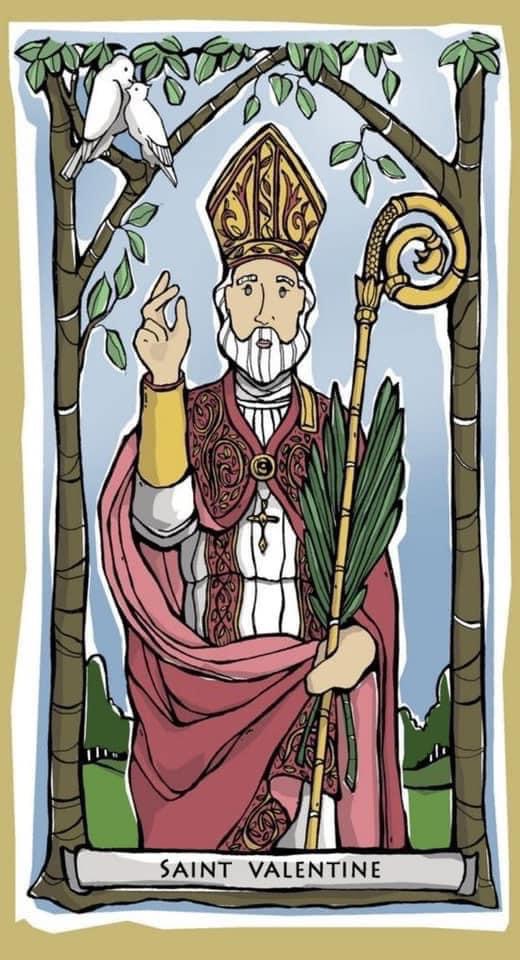
Saint Valentine

There once lived, in the twilight of Rome’s grandeur, a humble priest named Valentine. He walked those ancient streets under the watchful eyes of statues and emperors, but his heart beat for a Kingdom not of this world. The age was that of Emperor Claudius II, who saw fit to forbid Christian marriages—believing that soldiers, untethered by wife or child, would better serve his legions.

Yet for all that Rome considered wise in war and statecraft, Valentine recognized a higher wisdom. In the words of Tertullian, one of the early Fathers, “What has the Emperor to do with the Christian, save to learn that Christ’s kingdom is not of this world?” Still, Claudius decreed the banning of Christian unions. The priest Valentine dared to minister in secret, solemnizing the vows between Christian men and women who would not be robbed of the sacred blessing of marriage.

“For this reason a man shall leave his father and mother and be joined to his wife, and the two shall become one flesh” (Ephesians 5:31).

These forbidden weddings, carried out by candlelight in hidden chambers, were Valentine’s gentle rebellion. He believed that, in God’s design, love—especially the love that binds husband and wife—carries within it an echo of the divine. Even in the gloom of persecution, he offered hope, for “love bears all things, believes all things, hopes all things, endures all things” (1 Corinthians 13:7).

It was not long before the Roman officials turned their dark attention upon him. Love, when nurtured in the face of cruelty, tends to shine all the brighter, and such a light cannot easily hide itself. Arrested and imprisoned, Valentine found himself behind cold, unyielding bars. Roman records say that he healed a jailer’s daughter who had lost her sight. She came to see not only with physical eyes but, as the legend goes, gained the spiritual sight to embrace Christ.

Some traditions whisper that he signed a final note to her with the words “From your Valentine.” Perhaps that detail has grown with time, but it illustrates well the warmth of this man’s heart—compassion that would bloom into legend. In the spirit of St. Augustine, who wrote that “love is the beauty of the soul,” Valentine’s every action seemed a testament to that singular virtue.

Alas, the hand of Rome was relentless. Valentine, who would not betray his Lord or his calling, was subjected to beating, torture, and, ultimately, the sentence of death. On the 14th of February—around the year 269 AD—he was beheaded. It was a grisly end in human terms but, in Christian conviction, it was the very gateway into eternal life.

Indeed, if we reflect upon his final hours, we might recall the counsel of another Church Father, Ignatius of Antioch, who wrote, “It is better for me to die in Christ Jesus than to be king over the ends of the earth.” Valentine’s sacrifice, crowned in martyrdom, proved that no earthly power could rob him of his divine inheritance.

(Adapted from Saint Valentine, by the folks at Ecclesiastical Sewing | ecclesiasticalsewing.com)
Saint Nicholas

Nicholas was born around the early fourth century at Patara in Asia Minor (modern Turkey). He became bishop of Myra, and he was well known for his personal piety, his zeal for the faith, and the miracles that resulted from his prayers. According to tradition, he secretly gave money to a poor family to prevent three daughters from being sold into slavery because they each lacked a dowry, one of his many acts of charity to the poor. Nicholas was imprisoned during the persecution of Christians under the Roman emperor Diocletian and confessed his faith in Christ. For whatever reason, however, he was imprisoned but not executed, and by God’s grace, he survived. He attended the Council of Nicaea, where he defended the deity of Christ and condemned the heresy of Arianism. He died in 346 and was later buried in Myra. (Adapted from Saints: Becoming an Image of Christ Every Day of the Year, by Beutner)

St. Michael the Archangel

“War broke out in heaven: Michael and his angels fought with the dragon; and the dragon and his angels fought, but they did not prevail, nor was a place found for them in heaven any longer” (Revelation 12:7). These words begin the traditional Epistle lesson appointed for the Feast of Saint Michael (Sept. 29). What or who are the angels? Why do they matter? Why do we have a feast day in the catholic Church designated just for them? And what do they have to do with the Church today and with the day to day lives of the children of God? Click here to listen to the sermon for the Feast of Saint Michael from Father Josh Leigeber at All Saints parish.

Exaltation of the Holy Cross

Day before yesterday was the Feast of the Exaltation of the Holy Cross, sometimes simply referred to as Holy Cross Day. This sermon from Father George Fields wonderfully illuminates for us the importance of this day.

Merciful and everlasting God, who didst not spare Thine only Son but delivered Him up for us all that He might bear our sins on the cross : Grant that our hearts may be so fixed with steadfast faith in Him, that we may not fear the power of any adversaries; through Jesus Christ, our Lord. Amen.

Dormition of the Blessed Virgin Mary

Since St. Mary is truly the mother of Jesus, then surely she must also be called the mother of God, since Jesus is God. Behold in her motherhood the mystery of the incarnation. For how can He who is the eternal God, ever blessed, have a mother? How can this virgin contain within her womb Him who holds all things? How can a creature bear the Creator? Reason will never know, but faith must bend the knee, believing, and say, Mary bore God, held God in her arms, and nursed God at her breast; Mary laid God in an infant bed, made soup for God, yea, was mother to God in every way proper for a mother to be a mother.

For in this is the reality of the incarnation: God Himself has become flesh, our flesh. Since this is so, He must also have a mother. Thus all motherhood is sanctified in this, and serves to show forth the humble manner in which our salvation was wrought. And all generations must call this virgin blessed, since she has now in truth become the mother of all who are in Christ. And as she was of lowly state, in order that Christ might be born of lowly state, so also must we all humble ourselves and consider the lowly state of faith to be truly high in the sight of God. (Burnell Eckardt, from “Every Day Will I Bless Thee: Meditations for the Divine Office”)

St. Lawrence, Deacon & Martyr (Aug. 10)

During the persecution of Christians under the Roman emperor Valerian in the year 258, Roman officials ordered Lawrence, a deacon, to bring them the treasures of the Church. Lawrence obediently spent the next three days gathering together the poor people who were supported by the Church. When he presented these poor people to the prefect, explaining that they were the true treasures of the Church, the prefect was not amused by the irony. He had Lawrence slowly burned to death over a great gridiron. During this torture, Lawrence made the famous reply that he was done on that side and could be turned over. After having prayed for the conversion of the city of Rome in order that the Christian faith might spread throughout the world, Lawrence died. The example of his life and death made a great impact on the people of Rome, and many became followers of Christ. Lord, show us how to love and serve the poor like Saint Lawrence.

(Adapted from “Saints: Becoming and Image of Christ Every Day of the Year,” by Dawn Beutner)

Saint Patrick, Bishop & Martyr (Mar. 17)

On this day, the Church commemorates St. Patrick, Missionary to Ireland. It is good to remember this well-loved and best-known missionary saint for his life and work. He was born to a Christian family in Britain around AD 389. Captured by raiders as a teen, he was forcefully taken to Ireland and forced to work as a herdsman. He escaped after six years of imprisonment and entered a monastery in France. He was ordained as a bishop and is believed to have returned to Ireland in 433 AD, where he spent the rest of his life proclaiming the Gospel and founding Christian communities. He was a defender of the doctrine of the Holy Trinity during a time when the doctrine was under attack. He wrote many contributions, including his autobiography and prayers and hymns that are still used today. He is believed to have died on March 17, AD 466 in Ireland.

“I bind unto myself the name,
The strong name of the Trinity,
By invocation of the same,
The Three in One and One in Three.
By whom all nature hath creation,
Eternal Father, Spirit, Word:
Praise to the Lord of my salvation,
Salvation is of Christ the Lord.”
–From St. Patrick’s Breastplate

Description adapted from, and St. Patrick’s Breastplate quoted from: “Treasury of Daily Prayer,” 1285-1286.